Maine Coon
The Maine Coon is one of the world's largest domestic cat breeds, known as the "gentle giant." This naturally occurring breed originated in the US state of Maine, where they developed into hardy and clever mouse hunters. Today, they are beloved family members who charm with their majestic appearance and dog-like personality.
Character
Maine Coons are intelligent, playful, and extremely friendly companions. Unlike many other cats, they are not overly demanding, but they enjoy the company of their "human herd" and often follow family members from room to room. They are known for their distinctive "purring" and hissing, which they use to communicate. Maine Coons retain their kitten-like playfulness into old age and get along very well with children and other pets, including dogs.
Health
Maintenance
With Maine Coons, it is important to monitor hereditary health problems. Responsible breeders perform genetic tests on parents for the following diseases:
Hypertrophic cardiomyopathy (HCM): The most common heart disease in cats.
Pyruvate kinase deficiency:A hereditary genetic disorder that affects red blood cells in cats. It results in chronic hemolytic anemia.
Spinal muscular atrophy (SMA): A genetic disease that affects mobility. Before acquiring a kitten, it is advisable to check that the breeding animals have undergone the relevant DNA tests and ultrasound examinations.
Although Maine Coons are large, they do not need strenuous physical exercise. However, they are very intelligent and need mental stimulation – interactive toys, climbing trees, and even walking on a leash are all enjoyable for them. Unlike many other breeds, many Maine Coons have a strange fondness for water; they may splash around in a bowl of water or join their owner in the shower.
Feeding
It is recommended to provide high-quality food with a high meat content, specially designed for large cat breeds. Since Maine Coons grow slowly (reaching their full size only at 3–5 years of age), their food must support joint development and heart health. It is important to monitor portion sizes to avoid obesity, which puts strain on the joints.
Grooming
The Maine Coon's semi-long coat has a silky texture and is water-repellent. Unlike Persian cats, their coat does not mat easily, but thorough brushing 2-3 times a week is necessary to remove dead hair and prevent tangles (especially under the armpits and in the groin area). The main shedding periods are in spring and fall. It is also important to check their ears regularly and trim their nails.
Important
Maine Coons are a late-maturing breed. This means that they remain "teenagers" much longer than other cats. Owners should bear in mind that their large size requires sufficient space at home: standard scratching posts and litter boxes are often too small for them, so XL-sized accessories are preferable.
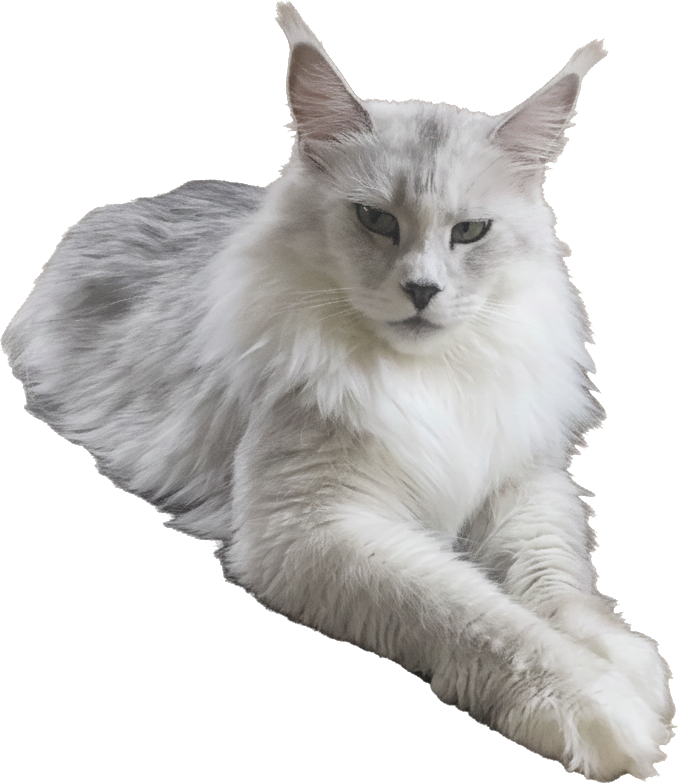
Maine Coons get along very well with children. Thanks to their large size and calm temperament, they are not as fragile as some smaller cat breeds, making them well suited to families with small children. They are known for their high tolerance threshold and, rather than engaging in conflict, they prefer to simply walk away if play becomes too rough.
If you are looking for an animal that will spend long days alone outside or in a closed room, then Maine Coons are not for you. They are social "gentlemen" and ladies who need to bond with their family. Although they may not be pushy lap cats, they want to be in the same room as you and be part of all the household activities. Prolonged solitude can make them unhappy and passive.
Maine Coons are observant and know exactly what is going on in the house. Unlike many other cats, they often have the dog-like habit of greeting guests at the door. They are very talkative and sometimes talk even without a conversation partner. This is not ordinary meowing, but each cat has its own special style of conversation.